Newfoundland and Labrador — The Rock
Capital: St. John's · Population: approximately 533,000 · Joined Confederation: 1949
Most Canadians who've been to Newfoundland will tell you it was one of the best trips of their lives. It's hard to explain until you've been there. Part of it is the landscape — treeless cliffs, icebergs drifting past in June, puffins on outer islands, whales so numerous they're almost monotonous. Part of it is the culture — a four-hundred-year-old English-Irish outport tradition that's still alive in the accent, the fiddle music, and the storytelling. And part of it is the scale: you can drive for three hours between towns with nothing in between but bog, rock and the Atlantic, and then arrive in a village where twenty people are dancing in the local bar to a fiddle tune that predates your country.
A Compact History
Newfoundland was home to the Beothuk people (who were tragically extinguished as a distinct people by the early 1800s) and the Mi'kmaq. The Norse settled briefly at L'Anse aux Meadows around 1000 CE — the first confirmed European settlement in North America, predating Columbus by 500 years. John Cabot claimed the island for England in 1497. Irish and West Country English fishermen and their families settled the coast from the 1500s onward, giving the island its distinctive accents.
Newfoundland was a separate British Dominion, not a Canadian province, for most of its history. It went broke during the Great Depression, reverted to direct British governance in 1934, and after a bitterly contested 1948 referendum, voted 52-48 to join Canada in 1949. The cod fishery sustained the economy for four centuries until the federal government imposed a moratorium in 1992. About 30,000 people lost their jobs overnight. The offshore oil industry, which started producing in 1997, is now the largest private employer.
St. John's
St. John's (not to be confused with Saint John, New Brunswick) is the provincial capital, the oldest continuously European-settled city in North America (some claim Spanish-Catholic St. Augustine is older, which is disputed), and a city of about 213,000 in the metropolitan area. It sits on the Atlantic coast of the Avalon Peninsula, built onto the steep hills around one of the most sheltered natural harbours in the world.
What should I see on a first visit?
Climb Signal Hill, the tall hill at the harbour mouth where Marconi received the first transatlantic radio signal in 1901. The view is spectacular and the walk down (via the North Head Trail, along the cliffs above the harbour) is one of the best short hikes in any Canadian city. Walk Water Street and Duckworth Street, the oldest commercial streets in the country, and Jellybean Row — the famously painted wooden rowhouses on Gower Street and Prescott Street. The Rooms is an ambitious combined art gallery, provincial museum and archives in a modernist building on top of the hill. Cape Spear, the easternmost point of North America, is a 20-minute drive out of town and worth it at sunrise.
What about George Street?
George Street is a two-block stretch of downtown St. John's that claims to have the most bars and pubs per square foot of anywhere in North America. It might be true. On a Friday night in summer it is something to see. If you're doing the "Screech-in" (the semi-official ceremony in which visitors become honorary Newfoundlanders by kissing a cod, drinking Newfoundland rum called Screech, and saying a phrase in dialect), this is the neighbourhood for it. It's touristy but a lot of the locals participate too.
Is St. John's expensive?
Less than Halifax. A one-bedroom downtown rents for CAD $1,300 to $1,700 in early 2026. Restaurants are reasonable. The HST is 15 percent, same as the other Atlantic provinces.
What's the weather like?
St. John's is the foggiest and one of the wettest cities in Canada — about 124 days of fog a year, 1,514 mm of precipitation. It's not as cold as the prairies; winters hover around -5°C with regular freeze-thaw cycles. Summers are cool (July average around 16°C). Bring layers no matter when you visit.
Gros Morne National Park
Gros Morne, on the west coast of the island, is a UNESCO World Heritage Site. It's the second-largest national park in Atlantic Canada and one of the most geologically important places on Earth — the Tablelands here are one of the few places where you can walk on exposed mantle rock, pushed to the surface by plate tectonics. The Gros Morne mountain itself is the second-highest peak in the province, a steep scramble that most hikers do in a hard day trip.
What should I prioritize?
The boat tour of Western Brook Pond — a freshwater fjord cut by glaciers into the cliffs — is the single most famous experience in the park. The hike to the Tablelands, where you stand on the Earth's mantle, is the second. The coastal villages of Woody Point and Norris Point are worth meals and a night. Allow three days in the park minimum; a week if you're a hiker.
How do I get there?
Fly to Deer Lake airport (direct from Halifax, Toronto, Montreal and a few other cities) and rent a car. It's a 6-hour drive from St. John's across the width of the island.
L'Anse aux Meadows
At the very northern tip of the Great Northern Peninsula, L'Anse aux Meadows is the only confirmed Norse settlement in North America outside Greenland. Excavated in the 1960s, it's a UNESCO World Heritage Site and a Parks Canada historic site. The reconstructed sod-roof Viking buildings are on the original archaeological footprint. It is genuinely remote (a 5-hour drive from Gros Morne) but for anyone interested in pre-Columbian North America it's the real thing.
Corner Brook
Corner Brook, population about 19,000, is Newfoundland's second city and the main service centre on the west coast. Marble Mountain Resort, just outside town, is the largest ski resort in Atlantic Canada — 1,400 feet of vertical, reliable winters, and a spectacular view over the Humber Arm. Worth a day if you're passing through in winter.
Labrador

Labrador, the mainland portion of the province, is three times the size of Newfoundland but has less than a tenth of the population (about 27,000 people). It's connected to Quebec by road (the Trans-Labrador Highway) and to Newfoundland by ferry from St. Barbe to Blanc Sablon. Most visitors will fly in, either to Happy Valley-Goose Bay or to Churchill Falls. The landscape is boreal forest, tundra, and some of the most intact wilderness in North America. Torngat Mountains National Park at the northern tip is only reachable by charter flight or by sea; few visitors go but those who do generally rank it among the great wilderness experiences of their lives.
Newfoundland and Labrador FAQs
When can I see icebergs?
Late May through early July is peak season. Icebergs drift south down the "Iceberg Alley" along the east coast after calving from Greenland glaciers. Twillingate, Bonavista, and the Avalon Peninsula all offer iceberg viewing. Newfoundland's iceberg finder website (run by the provincial tourism office) tracks real-time sightings.
What's the time zone?
Newfoundland Standard Time is UTC-3:30 — a half-hour offset from Atlantic Time, 90 minutes ahead of Eastern. Labrador mainland (except for Lab West) is on Atlantic Time. This half-hour offset is almost unique in the world and trips up every first-time visitor.
Can I understand the accent?
In St. John's and tourist areas, yes. In the outports, not always on first listen. The dialect has preserved words and grammatical structures from 17th-century West Country English and Irish. The locals will slow down if they see you're struggling. Pick up a copy of the "Dictionary of Newfoundland English" for the full experience.
Is the island safe for solo travel?
Yes, almost remarkably so. Crime rates are among the lowest in Canada. The biggest practical risks are moose on highways at dusk (the island has about 120,000 moose and a few hundred collisions a year) and weather changing quickly.
How do I get there?
Fly into St. John's (direct flights from most major Canadian cities and from London Heathrow seasonally) or Deer Lake. The ferry from Nova Scotia (North Sydney to Port aux Basques) takes 7 hours; it's more economical if you're bringing a car.
Education & Post-Secondary Institutions
Newfoundland and Labrador's post-secondary landscape is anchored by Memorial University, one of Canada's most affordable universities, alongside a strong college system and marine-focused training institutions befitting a province built on the ocean.
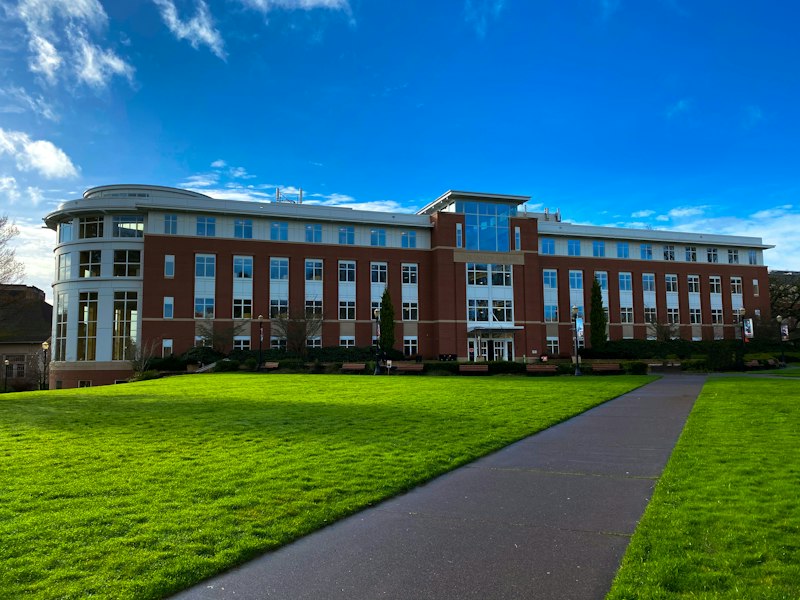
Memorial University of Newfoundland (MUN)
Named in memory of Newfoundlanders lost in the First World War, MUN is the province's flagship research university. Renowned for ocean sciences and offshore engineering (the Ocean Sciences Centre is world-class), folklore studies, medicine, and business. MUN charges the lowest tuition fees of any major Canadian university — a deliberate policy to keep higher education accessible in a province with significant rural poverty.

College of the North Atlantic (CNA)
The province's public college system, with 17 campuses serving communities from Labrador City to St. Anthony. Known for trades, technology, health sciences, and business programs that support the province's resource, fisheries, and healthcare industries. CNA also operates an international campus in Qatar.

Marine Institute (MI)
A campus of Memorial University and one of the world's leading institutions for marine, offshore, and fisheries training. The MI houses a full-scale marine simulation centre, an aquaculture research facility, and programs in nautical science, ocean instrumentation, and petroleum engineering — reflecting Newfoundland's deep connections to the sea and offshore oil.

Grenfell Campus – Memorial University
Memorial's western campus serves students from western Newfoundland and Labrador. Known for environmental science, fine arts, and social work programs. The corner Brook setting in the Bay of Islands provides a distinctive environment for environmental and outdoor studies.

Sports Teams & Athletic Culture
Newfoundland is a hockey province, full stop. The Growlers' ECHL success gave St. John's professional hockey again after years without it, and the St. John's Regatta is the oldest continuously held sporting event in North America.
 GRWLRS
Newfoundland Growlers
The Growlers have been one of the ECHL's great success stories, winning the Kelly Cup in their first season. Mary Brown's Centre is consistently sold out and the fan culture — loud, warm, genuinely funny — perfectly reflects the character of St. John's.
REGATT
Royal St. John's Regatta
The oldest continuously held sporting event in North America, dating to 1826. Held on Quidi Vidi Lake on the first Wednesday of August, it is a city-wide holiday. Government offices, most businesses and Memorial University all close for Regatta Day.
 MUN
MUN
Memorial Sea-Hawks
MUN's athletic program competes in the AUS conference with particular pride in its soccer program, which regularly qualifies for the national championship. Rugby is played at the club level with intensity.
Culture, Arts & Identity
Newfoundland's culture is perhaps the most distinct of any Canadian province — geographically isolated, historically separate (it joined Confederation only in 1949), and possessed of a dialect, a music tradition and a sense of humour that are genuinely its own. The province joined Canada late and has never entirely stopped noticing the difference.
Language and Humour
Newfoundland English is not a degraded form of standard Canadian English — it is a separate dialect with roots in West Country English and southern Irish, preserved in isolation for three centuries. The vocabulary is different (a scrunchion is a fried pork rind; to be mauzy is to feel listless on a damp day), the prosody is different, and the speed and indirection of Newfoundland wit is something you have to earn. The province produces a disproportionate share of Canada's comedians and storytellers.
Music
The kitchen party — an informal gathering around a stove or kitchen table where someone inevitably picks up an instrument and someone else starts to step-dance — is not a tourist performance in Newfoundland. It's how music happens. The Great Big Sea brought Newfoundland folk-rock to national attention in the 1990s. The traditional music — reels and jigs on fiddle and accordion, ballads that go back to pre-Famine Ireland — is still played in pubs along George Street in St. John's on any given Thursday night.
The Fishery and Its Loss
The 1992 cod moratorium — the federal government's shutdown of the northern cod fishery after five centuries of exploitation had collapsed the stock — was one of the most traumatic economic events in Canadian provincial history. Thirty thousand people lost their livelihoods overnight. The moratorium's legacy shapes politics and community in outport Newfoundland to this day. The fishery has partially recovered for other species (crab, shrimp) but the cod have not returned in numbers that would allow a reopened fishery.
L'Anse aux Meadows
At the very northern tip of Newfoundland, the UNESCO World Heritage Site of L'Anse aux Meadows preserves the remains of a Norse settlement from around 1000 CE — the oldest confirmed European presence in the Americas, five hundred years before Columbus. The reconstructed longhouses and sod buildings are a quiet and moving place, especially in the fog that rolls in off the Labrador Sea in summer.